Sutton Square Luxury Living in Manhattan's 10022
June 18, 2026
June 18, 2026
If you picture Midtown East as all towers, traffic, and constant motion, Sutton Square may come as a surprise. Tucked within Manhattan’s 10022 zip code, this small riverside enclave offers a very different experience, one shaped by historic houses, a controlled streetscape, and a sense of remove from the larger grid. If you are exploring architecturally significant Manhattan addresses, understanding Sutton Square helps you see why this pocket remains so distinct. Let’s take a closer look.
Sutton Square sits within 10022 in Midtown East, on the East Side of Manhattan. In the broader zip code, apartment buildings with shops or offices are the most common housing type, which makes Sutton Square’s low-rise residential form stand out.
This is an important part of its identity. Rather than reading like a conventional commercial neighborhood, Sutton Square feels more like a small river-edge enclave within a much busier and denser part of Manhattan.
The larger 10022 area is mostly residential and well connected to the rest of the city. According to NYC’s Neighborhood Explorer, the zip code is served by the 4, 5, 6, E, M, N, R, and W subway lines, along with a large bus network and Citi Bike.
That means Sutton Square benefits from Midtown East convenience without feeling defined by it. You are close to transit, services, and major destinations, but the immediate setting has a more insulated character than many nearby blocks.
One of the most interesting things about Sutton Square is the contrast between access and atmosphere. You are in a part of Manhattan with everyday infrastructure nearby, including an average number of food shops and healthcare facilities across 10022, yet Sutton Square itself reads as more private and residential.
That contrast is part of the appeal. For buyers who want a central Manhattan location but are drawn to a more contained setting, Sutton Square offers a rare combination.
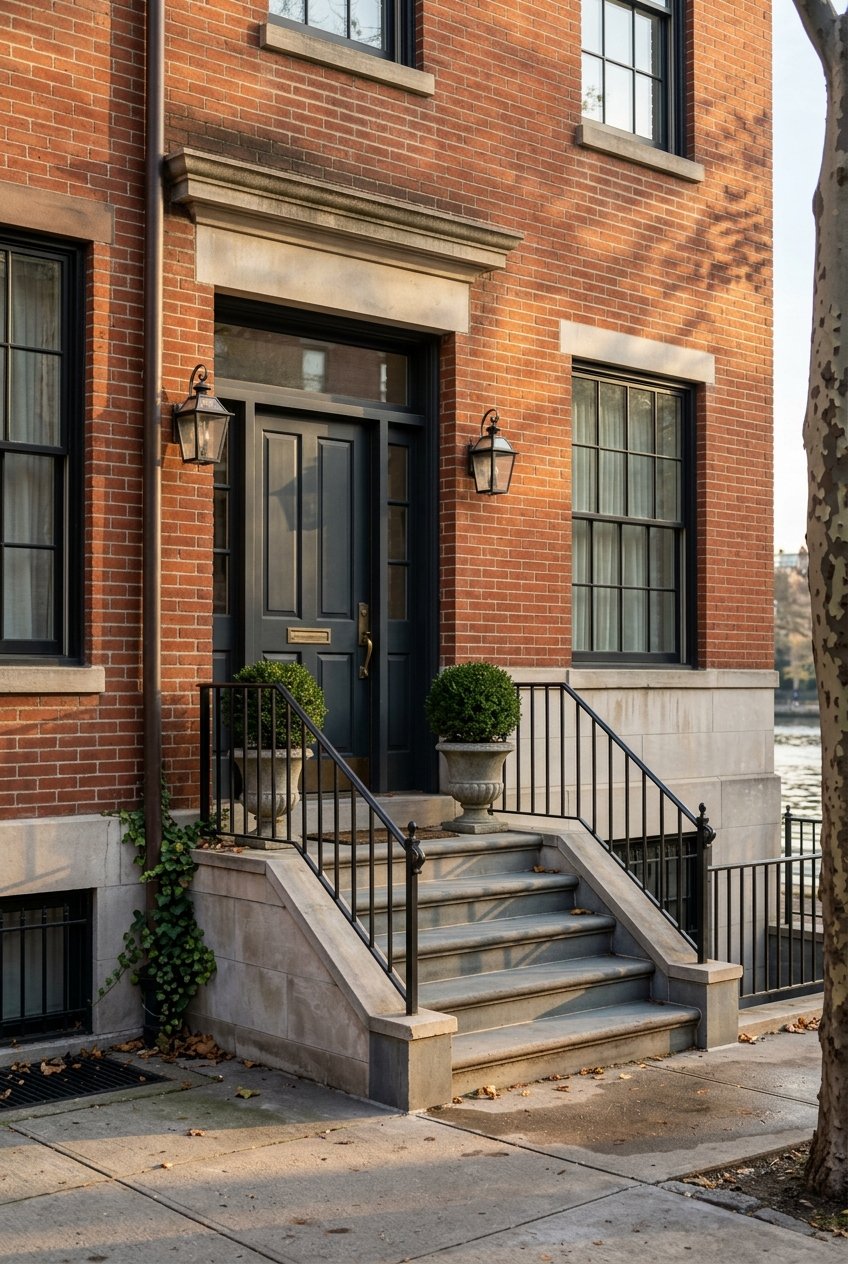
Sutton Square’s identity is deeply tied to its historic status and architectural fabric. The Sutton Place Historic District is listed on the National Register of Historic Places and includes 4 to 16 Sutton Square, with periods of significance spanning 1900 to 1924 and 1925 to 1949.
NYC Planning describes the district as a collection of four- and five-story single-family residences built of brick or stucco, with the earliest designs dating to 1920. That physical scale is unusual in this part of Manhattan and gives the area a more intimate, house-centered feel.
The district was developed through a syndicate headed by architect Eliot Cross. NYC Planning notes that the concept was meant to redesign the city’s typical nineteenth-century residences as an alternative to apartment-house living and as a response to suburban flight.
That origin still matters today. Sutton Square does not feel accidental. It feels intentional, with a residential form and layout that were designed to offer a distinct way of living in Manhattan.
In a neighborhood context where larger apartment buildings often define the streetscape, Sutton Square’s architecture makes an immediate impression. The district is associated with Colonial Revival and related historic styles, and the houses create a unified visual rhythm that feels carefully preserved.
For buyers who value provenance, scale, and architectural continuity, that setting can carry real meaning. The appeal is not just the address. It is the way the built environment holds together as a coherent residential composition.
One of Sutton Square’s defining features is its communal landscaped garden. NYC Planning states that the garden is jointly owned by the district’s residents through Sutton Square Inc., and that Sutton Place is one of only two neighborhoods that survive as distinct enclaves retaining a communal landscaped garden.
That detail helps explain why the block feels so unusual in Manhattan. The garden adds a shared interior green space that reinforces the enclave’s resident-oriented character and sets it apart from the surrounding Midtown East streetscape.
In many Manhattan settings, open space is external to the residential experience. Here, the communal garden is woven into the identity of the block itself.
It creates a stronger sense of separation from the city outside. It also supports the impression that Sutton Square is not simply a row of houses, but a deliberately preserved residential environment.
Sutton Square also stands out because of how it relates to the East River. NYC Planning’s Manhattan Waterfront Plan explains that Sutton Place from East 54th to East 59th Streets sits higher than the FDR Drive, with apartment buildings directly over the Drive, and that there is no available waterfront land for a new esplanade in this area.
Instead of a continuous public promenade, the area depends on small cul-de-sac parks at the ends of streets from East 54th through East 58th Streets. That physical arrangement shapes everyday experience in a meaningful way.
Rather than one long waterfront path, you encounter a sequence of smaller public spaces. NYC Parks describes Sutton Place Park as part of a series of five vest-pocket parks along the East River waterfront near Sutton Place, with a bi-level design and views of the Queensboro Bridge.
Sutton Place Park itself is a 0.27-acre neighborhood park with a sandbox and playground equipment. These details reinforce the area’s smaller scale and help explain why the riverside experience here feels more tucked away than expansive.
Sutton Square is best understood as calm in relation to its surroundings, not isolated from them. The dead-end geometry, small parks, and separation created by the FDR below give the area a quieter and more interior feel than the surrounding East Side grid.
At the same time, you are still within the broader Midtown East framework. That means access to transit, nearby services, and institutional destinations such as the United Nations headquarters in nearby Turtle Bay remains part of the lifestyle equation.
This is a key distinction for anyone considering the area. Sutton Square may feel removed from the city’s pace, but it is not remote in practical terms.
That balance often matters to buyers looking for a Manhattan home with a sense of retreat. You can have a more contained residential setting while staying close to the systems and destinations that support daily life.
Based on the documented layout and history, Sutton Square functions as a semi-private residential pocket within a far more active Midtown East setting. Its low-rise scale, resident-owned open space, and street-end separation all contribute to that impression.
For privacy-focused buyers, that can be especially compelling. The area offers a form of discretion that comes less from spectacle and more from physical design, controlled streetscape, and architectural continuity.
Sutton Square’s appeal is not based on size or density. It comes from rarity.
In 10022, where larger mixed-use and apartment building forms are common, Sutton Square offers a preserved collection of single-family houses with a communal garden and a distinctive relationship to the river. That combination is difficult to replicate elsewhere in Manhattan.
Sutton Square may resonate with buyers who are drawn to architecturally significant homes, lower-scale residential settings, and established Manhattan addresses. It may also appeal to those who want proximity to Midtown East without living in a more typical apartment-driven streetscape.
For some, the value will be historic character. For others, it will be the enclave quality, the garden, or the way the block feels set apart from the city around it.
In a city that is always changing, Sutton Square stands out because it still reads as a place with a clear original idea. Its houses, communal garden, and riverside orientation continue to express a residential vision that differs from the broader Midtown East environment.
That is what makes it memorable. Sutton Square is not just another Manhattan address. It is a deliberately preserved enclave with architectural identity, spatial distinction, and a quieter kind of presence.
If you are considering a purchase or sale involving an architecturally significant Manhattan property, working with an advisor who understands nuance, positioning, and discretion can make a meaningful difference. To discuss Sutton Square or other prime Manhattan opportunities, connect with Andres Perea-Garzon.
Stay up to date on the latest real estate trends.


Operating at the highest levels of Manhattan real estate, delivering strategic guidance, discretion, and precision across complex, high-value transactions.