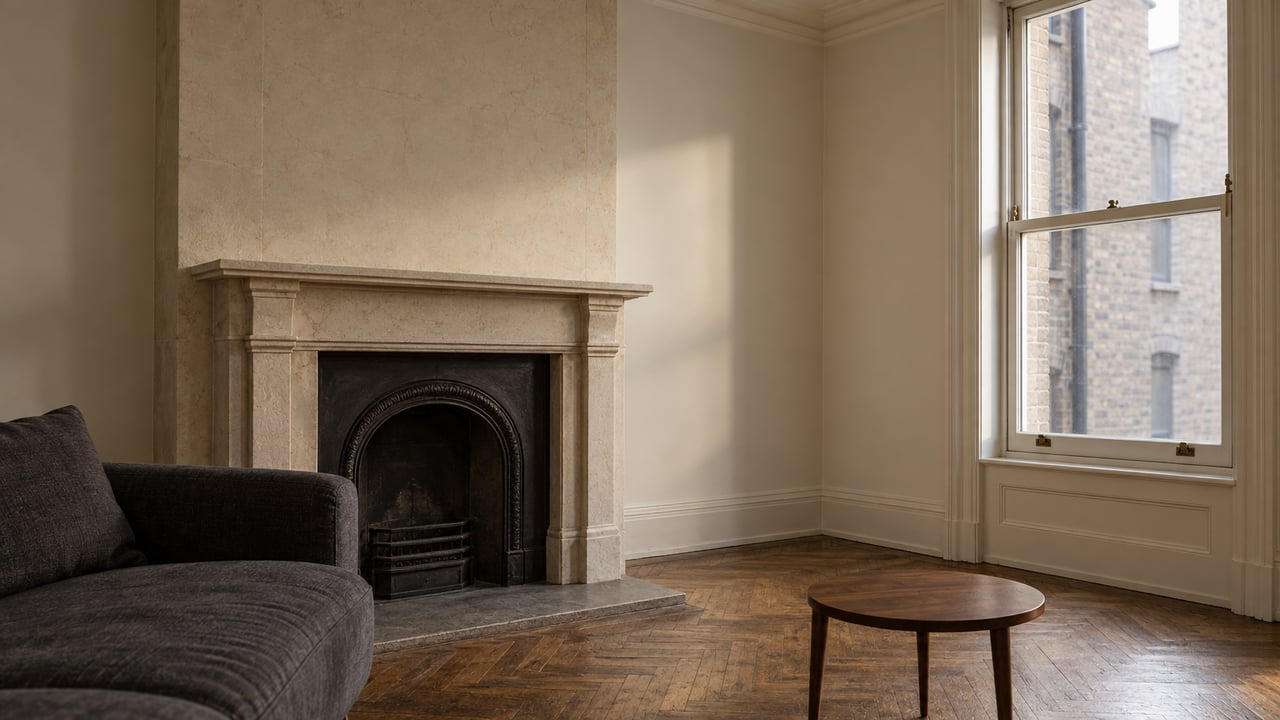
Sutton Place's Median Price Is Being Written by One Building
October 1, 2026
October 1, 2026
What is the median sale price in Sutton Place right now? Ask that question online and you will get at least three different answers, sometimes on the same afternoon. One will land near $775,000. Another will land above $4 million. A third will split the difference at roughly $1.2 million. None of these numbers is wrong. They are measuring three different things and calling all three "Sutton Place."
The split is not a data error. It is the neighborhood telling you something true about itself: Sutton Place is currently two markets sharing one zip code, and the number everyone quotes is being pulled toward its high end by the closings inside a single building.
Sutton Place, the six blocks between East 53rd and East 59th Streets along the river, is still overwhelmingly a co-op neighborhood. Prewar buildings with proprietary leases, boards, and shareholder culture make up most of what actually trades here, and that inventory has been softening. The most recent read on co-op pricing this year put the median in the neighborhood of $775,000, down roughly 13 percent from a year earlier, as some of the older stock adjusts to what buyers are willing to pay for apartments that need work.
That figure describes the neighborhood most buyers actually encounter when they start touring. It also describes a market with real friction built in. Sutton Place boards have a reputation for being conservative even by Manhattan co-op standards Pied-à-terre purchases get evaluated building by building,
None of that shows up in a headline median. It shows up at the board interview, three months after the number on the listing convinced someone to make an offer.
A flip tax adds another layer that a portal price never captures. A recent Sutton Place co-op resale on East 57th Street carried a 2 percent flip tax that Brick Underground reported came to roughly $20,000 for the buyer on a $995,000 purchase, on top of monthly maintenance north of $2,600. That is a normal transaction cost in this part of Manhattan, but it is invisible until someone is sitting across from a closing statement.
The other number, the one that makes Sutton Place look like it is appreciating sharply, belongs almost entirely to Sutton Tower at 430 East 58th Street. The 62-story building, designed by Thomas Juul-Hansen and developed by Gamma Real Estate and JVP Management, is the tallest residential building in the neighborhood and the second tallest in Midtown East after 432 Park Avenue. Every one of its 120 residences is a corner unit, no floor holds more than three apartments, and the building carries an Art Deco-inspired limestone crown that has become the new silhouette of the Sutton Place skyline. The path to that building was not simple. An earlier developer's plan for a nearly 1,000-foot tower on the site drew enough local opposition that the neighborhood pushed through a rezoning to cap future height, and Gamma Real Estate ultimately bought the site out of a foreclosure auction for $98 million in 2016 before building what stands there now.
When a single building of that scale starts closing units, it does not just add sales to the neighborhood total. It reshapes the total, because Sutton Place trades so few units in a given month that one building's closings can outweigh everything else combined. That is how a condo median near $4.5 million gets attached to a neighborhood where most of the housing stock trades for a fraction of that.
Even inside Sutton Tower, the number is still settling. Active listings in the building are currently asking an average of roughly $3,262 a square foot, while the apartments that have actually closed there average closer to $2,613 a square foot. That gap between what sellers are asking now and what buyers have actually paid so far suggests the building's own pricing is not fully proven out yet, let alone stable enough to anchor a neighborhood-wide figure.
Sit those two markets next to each other and a neighborhood-wide snapshot from earlier this summer lands almost exactly where you would expect a blend to land: a median sale price around $1,175,000 and roughly $1,114 a square foot across all property types. That number is not fictional. It is also not useful on its own, because it describes neither the co-op buyer weighing a board package nor the condo buyer comparing amenity floors. It describes an average of two decisions that have almost nothing to do with each other.
This is the part that matters if you are comparing Sutton Place to somewhere else, whether that is the Upper East Side, Turtle Bay, or another river-adjacent enclave. A blended median in a market this thin moves for reasons that have nothing to do with the neighborhood getting more or less desirable. It moves because of which few apartments happened to close that month. Compare Sutton Place's blended number to another neighborhood's co-op-only or condo-only figure and you are not comparing markets, you are comparing apples to a fruit basket.
The same distortion shows up building by building, not just co-op versus condo. At 1 Sutton Place South, a prewar white-glove cooperative known for its full-floor layouts and porte-cochère entrance, current activity shows 20 sales in the trailing 30 days at a median around $1.49 million, with roughly 9.1 months of supply on the market. That is a healthy, functioning co-op market by itself. It has almost nothing in common with what is happening 800 feet away at Sutton Tower, yet both numbers get folded into the same neighborhood statistic.
The mechanism that produced this year's split is not a one-time event. In April 2026, developers EJS Group and Krown Point Capital filed permits for a new high-rise tower on the border of Sutton Place and Midtown East, with ground-floor retail and amenities including a fitness center, a coworking lounge, and bike storage. The site sits within reach of Bloomingdale's, the Whole Foods on East 57th Street, and the landmarked Trader Joe's inside the old Bridgemarket space, the same commercial anchors that already serve Sutton Tower residents.
If that project moves from filed permits to closings, the neighborhood should expect the same pattern to repeat. A new building with a handful of high closings can swing a thin market's blended median again, in either direction, independent of what is happening to the co-op stock that makes up most of the neighborhood's actual housing.
If you are pricing a co-op sale in Sutton Place, the condo median is not your comparable, no matter how often it gets quoted as "the Sutton Place number." Your building's board culture, its flip tax, and its own recent closings matter more than a blended figure being carried by a tower down the block.
If you are buying into a new condo tower here, the mansion tax deserves early attention.
And if you are comparing Sutton Place to another Manhattan neighborhood using a single median price from a portal, ask which Sutton Place that number is describing. Right now, there are two honest answers, and only one of them is the market most buyers will actually transact in.
If you are weighing a Sutton Place purchase or sale and want to know which number in this market actually applies to your situation, Andres Perea-Garzon can walk through the specific building, board, and price tier that matters for your deal.
This article is general information, not legal, tax or financial advice. Consult a qualified professional about your situation.
Stay up to date on the latest real estate trends.



Operating at the highest levels of Manhattan real estate, delivering strategic guidance, discretion, and precision across complex, high-value transactions.