The Air-Rights Trade Quietly Repricing Landmarked Townhouses on the Upper East Side
August 27, 2026
August 27, 2026
Two rowhouses on East 78th Street just sold something you cannot see standing on the sidewalk in front of them. The buildings at 159 and 161 East 78th Street, a pair of 1861 Italianate houses designed by Henry Armstrong and individually landmarked since 1968, are not changing hands. Their owners are staying put. What moved, after a 9-4 vote by Manhattan Community Board 8's Landmarks Committee on April 21, 2026, was roughly 8,000 square feet of development rights the two buildings will never use, headed to a condominium site a block north on Lexington Avenue at 79th Street.
This is the part of a landmarked property's value that rarely comes up at a listing appointment, and it just became far easier to convert into cash. If you own, or are considering buying, a landmarked townhouse on the Upper East Side, that shift changes what the property is actually worth and what a seller may already have given away.
Every building sits on a zoning lot with a permitted floor area. Most Upper East Side townhouses were built well below the ceiling their lot allows, especially the low-rise rowhouses that make up much of the historic district. That gap between what stands and what zoning permits is unused development rights, commonly called air rights. For decades, an owner in a historic district had almost no practical way to sell that gap. Landmarks could transfer rights only to adjacent lots, the process ran through the City Planning Commission's discretionary 74-79 Special Permit, and the full review under the Uniform Land Use Review Procedure typically took 18 to 24 months. In more than fifty years, fewer than 15 of these transfers were ever completed citywide.
City of Yes for Housing Opportunity rewrote that process. The special permit requirement is gone. A transfer from a landmark is now what planners call ministerial, meaning it proceeds without a discretionary vote from the City Planning Commission once the paperwork clears. The pool of eligible receiving sites widened from adjacent lots to an entire block, plus lots directly across the street, and landmarks inside historic districts, previously excluded from this kind of transfer altogether, are now eligible. Brokers who work this corner of the market describe the buyer pool for a given landmark's air rights growing from two or three prospects to something closer to thirty or forty.
That is the mechanism behind what happened on 78th Street. It is also why owners of landmarked property across the Upper East Side are being called about a line of their balance sheet they may never have priced.
The 78th Street transfer was not an isolated event. Since May 2026, the Landmarks Preservation Commission has approved three separate development rights transfers from Upper East Side landmarks, all directed to the same receiving parcel on Lexington Avenue at East 79th Street. Alongside 159 and 161 East 78th Street, the commission approved a transfer from 116 East 80th Street, a 1922-23 Neo-Federal building designed by Cross & Cross. All three sending buildings sit inside the Upper East Side Historic District. The receiving site sits just outside it, on Lexington, where the developer Closer Properties acquired the parcel in October 2025 and has described plans for a boutique condominium.
Run the numbers on the 78th Street portion alone. Each rowhouse carries roughly 4,000 square feet of unused development rights, about 8,000 square feet combined, which land use attorney Deirdre Carson of Greenberg Traurig told the community board translates to roughly two additional floors on the receiving building. Landmark air rights in Manhattan have been trading between $180 and $400 per buildable square foot this year, with $200 to $250 the more common range. At that midpoint, 8,000 square feet works out to somewhere between $1.6 million and $2 million split between two rowhouse owners, before a single unit at the new condominium has broken ground.
That is real money attached to a building most owners think of only as a place to live. It is also, as the fine print makes clear, not entirely theirs to keep.
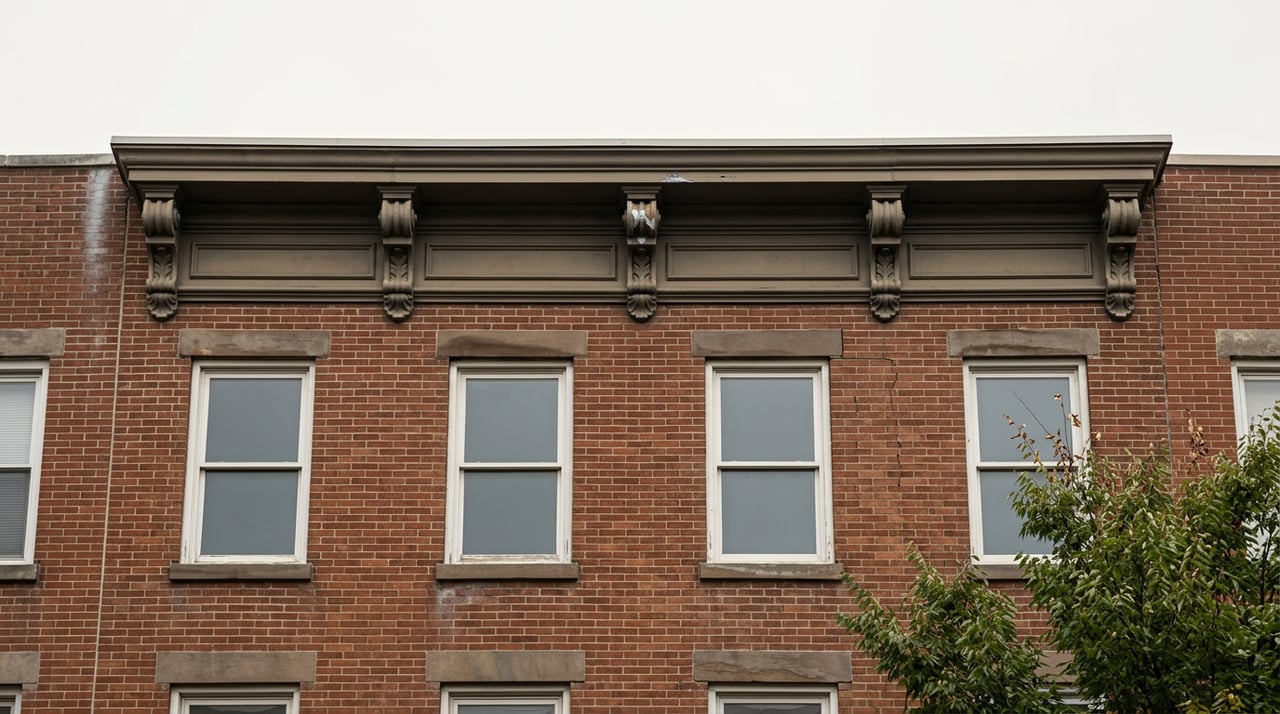
Selling air rights from a landmark is not a clean cash-out. To secure LPC approval, the 78th Street owners agreed to a Continuing Maintenance Program that requires a full structural and facade inspection every ten years for as long as the building stands. According to the terms presented to Community Board 8, the owners must also set aside 20 percent of the sale proceeds for initial restoration and hold an additional 10 percent in escrow for ongoing upkeep. On the 78th Street rowhouses, that restoration scope already includes replacing spalled and cracked brick, removing incompatible mortar and repointing the facade, repainting the brownstone trim, and installing new wood windows at 159 East 78th Street to match the historic configuration.
Do the arithmetic and roughly 30 percent of a rowhouse's air rights proceeds is spoken for before the owner sees a dollar. On a transaction in the $800,000 to $1 million range per building, that is $240,000 to $300,000 committed to restoration and another $80,000 to $100,000 locked in escrow. The trade is real: liquidity today for the unused capacity of a building, in exchange for a maintenance obligation that outlasts the current owner. For a family weighing whether to monetize a landmark's air rights before a sale or leave that decision to the next buyer, this is the number that actually governs the choice, not the headline price per square foot.
There is also a permanence to this that surprises people. Once a transfer is recorded, the reduction in buildable floor area on the sending lot is generally understood to be irrevocable, holding even if the building's landmark status were ever removed. A townhouse that sells its air rights is not renting out unused capacity. It is retiring that capacity for good.
Friends of the Upper East Side, the preservation advocacy group that has tracked LPC filings in the historic district for years, formally objected to all three 2026 transfers. Its concern was not the tool itself but the concentration: three separate landmarks sending rights to the same receiving site, with no agency evaluating the cumulative effect on light, air, and neighborhood scale at that corner. When the group pressed the commission on this during the public hearings, the LPC's answer was that its jurisdiction stops at reviewing the sending landmark's maintenance plan. What gets built on the receiving site, including its height and massing, falls to City Planning and the Department of Buildings under the ordinary zoning envelope, capped at a 20 to 25 percent floor area increase from landmark transfers before a full special permit is required again.
For a buyer evaluating a landmarked townhouse, the practical takeaway is not about the receiving site. It is about the sending one. Public land records will show whether a landmark's development rights have already been transferred away, a fact that should factor into how a buyer thinks about the property's ceiling, whether for a future addition, a rooftop expansion, or simply understanding what a neighboring parcel could still build. Manhattan has more than 1,200 landmarked buildings south of 96th Street, a meaningful share of them on the Upper East Side, and a growing number of their owners now have both the incentive and the mechanism to check what their air rights are worth.
Does a landmarked townhouse have to sell its air rights? No. The transfer is entirely optional and depends on the owner locating a willing receiving site and accepting a Continuing Maintenance Program.
Can any Upper East Side townhouse do this? Only individually designated landmarks and contributing buildings within a historic district are eligible, and the receiving site must fall within the expanded but still defined geography City of Yes permits, generally the same block or directly across the street.
If I'm buying a landmarked townhouse, how do I know if its air rights are already gone? A completed transfer is recorded against the property and searchable through public zoning and land use records tied to the address, the same records an attorney or title company would review during due diligence.
Does selling air rights change what the building looks like? No. The transfer moves unused floor area on paper. It does not authorize any physical change to the sending building, which remains bound by the same landmark protections it always had.
Every one of these deals starts with a single question few owners have ever been asked before this year: what is your building's unused capacity actually worth, and what does it cost to unlock it. For a landmarked property, that answer now sits on the closing statement of a building a block away, and it belongs in the conversation before a townhouse ever goes on the market.
If you own a landmarked property on the Upper East Side and want a clear-eyed read on what it is actually worth, inside and out, Andres Perea-Garzon is a straightforward call away. Let's Connect.
Stay up to date on the latest real estate trends.



Operating at the highest levels of Manhattan real estate, delivering strategic guidance, discretion, and precision across complex, high-value transactions.